What Hurts Your Credit Score the Most (and How to Fix It)
What Hurts Your Credit Score the Most (and How to Fix It)
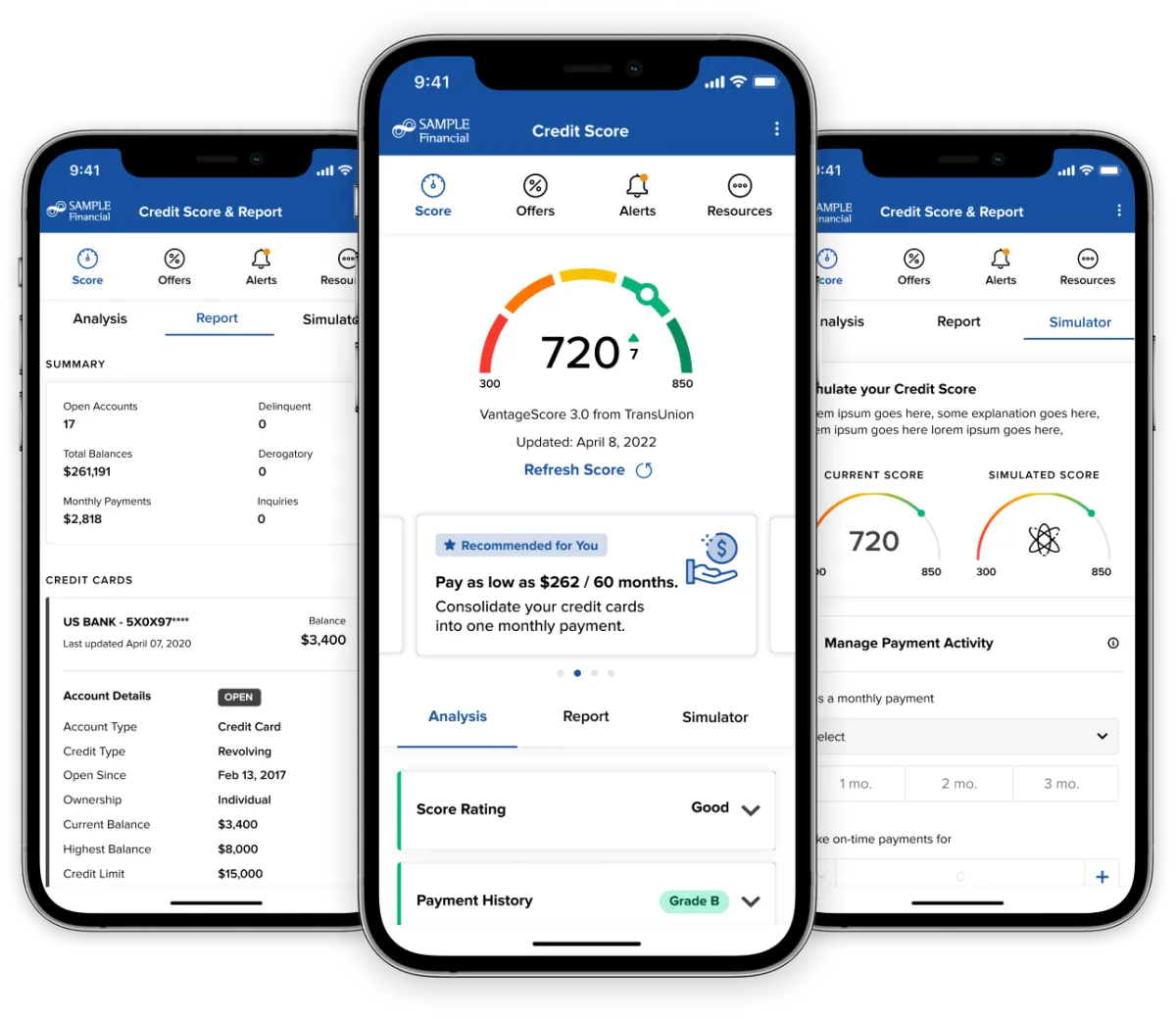
If your credit score isn't where you want it to be, you've probably wondered what's actually dragging it down. Is it that old collection from five years ago? The credit card you maxed out last summer? The one late payment you can't stop thinking about?
The truth is, credit scores aren't random, and they aren't a mystery. There's a formula behind them, and once you understand what actually moves the needle, you can stop guessing and start fixing.
This post breaks down exactly what hurts your credit score the most, ranked by impact, and what you can do about each one starting today.
The Quick Reality Check
Your FICO score (the one most lenders actually use) is built from five factors:
Payment history: 35%
Credit utilization: 30%
Length of credit history: 15%
Credit mix: 10%
New credit: 10%
Notice that payment history and utilization together make up 65% of your score. That means two thirds of what determines your credit is sitting in just two categories. If you fix those two, the rest tends to follow.
Now let's go through what actually hurts you, ranked from most damaging to least.

1. Missed and Late Payments
This is the heavyweight. Nothing tanks a credit score faster than a missed payment.
A single payment that goes 30 days past due can drop your score by 60 to 110 points, depending on where it started. The higher your score before the miss, the harder the fall. Someone at 780 might drop to 670 from a single late payment. Someone at 620 might only drop to 580.
It gets worse from there. A 60 day late is more damaging than a 30 day late. A 90 day late is worse than that. And once a payment goes 120 days past due, the creditor typically charges it off and sends it to collections, which is a whole separate negative event on your report.
How to fix it:
If you've already missed a payment, the damage is done, but you can limit how much worse it gets. Pay it as soon as possible. A payment that's only 30 days late will hurt less than one that hits 60 or 90 days. Some creditors won't even report a late payment to the bureaus if you catch it within the first month.
For payments that have already been reported as late, your best move is a goodwill letter. Write to the creditor, explain the circumstances (a job loss, a medical issue, an honest mistake), and ask them to remove the late payment as a one time courtesy. This works more often than people expect, especially if you've been a long term customer with otherwise good history.
Going forward, set up autopay on everything. Even autopay set to just the minimum payment is enough to protect your payment history. The minimum keeps you current. You can always pay more on top of it.
2. High Credit Card Balances
If you're carrying high balances on your credit cards, your credit utilization is probably wrecking your score, and you may not even realize it.
Credit utilization is the percentage of your available credit you're currently using. If you have a $5,000 credit limit and a $4,500 balance, your utilization is 90%. That's bad. Really bad. High utilization signals to lenders that you're financially stretched, even if you make every payment on time.
Here's the breakdown of what your utilization tells the scoring model:
Under 10%: Excellent. This is where you want to be.
10% to 30%: Good. Most people who land here have healthy scores.
30% to 50%: Mediocre. Your score is taking a hit.
50% to 75%: Bad. Score impact is significant.
Over 75%: Terrible. This is dragging your score down hard.
The fastest score gains usually come from paying down balances. Unlike payment history, which takes months to rebuild, utilization can improve in a single billing cycle.
How to fix it:
Three approaches, in order of effectiveness:
Pay down the balances. Obviously easier said than done, but this is the only permanent fix. Focus on the cards with the highest utilization ratios first, not necessarily the highest balances. A card at 90% utilization is hurting you more than a card at 40% utilization, even if the absolute dollar amount is smaller.
Request a credit limit increase. If you have a card with a $3,000 limit and a $2,000 balance (67% utilization), getting your limit raised to $6,000 drops your utilization to 33% without you paying down a single dollar. Most issuers let you request this online and respond within minutes. Just make sure they do a "soft pull" rather than a hard inquiry.
Pay before the statement closes. Most credit cards report your balance to the bureaus on the statement closing date, not the due date. If you pay your card down before the statement closes, the reported balance will be lower, which means your utilization looks better even if you charge a lot during the month.
3. Collections and Charge Offs
Collections happen when a creditor gives up trying to collect from you directly and either sells the debt to a collection agency or hands it over for collection. Charge offs happen when the original creditor writes the debt off as a loss (though you still owe it).
Both are major negative items. A single collection can drop your score 50 to 150 points depending on how much it is and how recent it is. And here's the thing nobody tells you: even after you pay a collection off, it can still hurt your credit if it's reported under the older FICO models that some lenders still use.
How to fix it:
Verify the debt is yours. Send a debt validation letter to the collection agency within 30 days of being contacted. They have to provide proof that you actually owe the debt. A surprising number of collections fall off when the agency can't (or won't) validate them.
Negotiate a pay for delete. This is when you offer to pay the collection in exchange for the agency removing it from your report entirely. Not all agencies will agree, and not all creditors allow this, but it's worth asking. Get any agreement in writing before you pay a dollar.
Settle for less. Collection agencies often accept 30 to 60 cents on the dollar. If you can't get a pay for delete, settling for less and getting the account marked as "paid" or "settled" is the next best option.
Just wait it out (in some cases). Collections fall off your credit report seven years from the original delinquency date. If a collection is already five or six years old, paying it might actually reset that clock under some scoring models. This is where you have to weigh whether to fight it or let it age off.
4. Bankruptcy, Foreclosure, and Repossession
These are the heavy artillery of credit damage. A Chapter 7 bankruptcy stays on your report for ten years. Chapter 13 stays for seven. Foreclosures and repossessions stay for seven.
The good news is that the impact lessens over time. The first two years are brutal. Years three to five, you can start rebuilding meaningfully. By year seven, the item has either fallen off or has so little weight that most lenders don't care much.
How to fix it:
You can't remove these items early in most cases (though it's worth pulling your report to make sure the reporting is accurate, since errors here are common).
What you can do is build positive credit on top of the damage. Secured credit cards, credit builder loans, and becoming an authorized user on a trusted family member's account can all add positive data points that offset the negative ones. Two years of perfect payment history after a bankruptcy looks very different from two years of nothing.
Most people are surprised at how much their score can recover within three years of a bankruptcy if they actively rebuild. Not back to 800, but often into the high 600s, which is enough to qualify for most things including a mortgage.
5. Too Many Hard Inquiries
Every time you apply for credit (a new card, an auto loan, a mortgage), the lender pulls your report. That's called a hard inquiry, and it can knock your score down by 5 to 10 points.
One inquiry isn't a big deal. The problem is when people shop for credit aggressively, opening (or trying to open) multiple accounts in a short window. Each inquiry stacks, and lenders see a pattern of credit hunger that makes you look risky.
How to fix it:
Hard inquiries fall off your report after two years, and they only affect your score for about one year. So time heals this one on its own.
The best move is to stop the bleeding. Don't apply for new credit unless you actually need it. When you do shop for major loans like a mortgage or auto loan, do all your shopping within a 14 to 45 day window. The credit scoring models treat multiple inquiries for the same loan type as a single inquiry if they happen close together, since they know you're rate shopping.
6. A Short Credit History
This one is more subtle, but it matters. The age of your credit history makes up 15% of your score, and it's tracked in two ways: the age of your oldest account and the average age of all your accounts.
If you have one credit card you've had for ten years, your oldest account is well established, but if you also have four cards you opened in the last six months, your average account age is now dragged down to about two years.
How to fix it:
Don't close old accounts. We said this in the credit repair post and we'll say it again here. Your oldest credit card is one of your most valuable assets, even if you never use it. Closing it shortens your credit history and reduces your total available credit, double damage.
If you don't trust yourself with an old card, freeze it, hide it, give it to a family member to hold. Just don't close it unless there's an annual fee you can't justify.
Becoming an authorized user on a family member's older account can also help. Their account history gets added to your report, instantly giving you more credit age.
7. A Thin or Limited Credit Mix
Lenders like to see that you can handle different types of credit responsibly. A perfect score requires a mix of revolving credit (credit cards) and installment loans (car loans, student loans, mortgages).
This is the smallest factor at 10%, so don't lose sleep over it. But if you only have credit cards and no installment loans, or only installment loans and no credit cards, this could be holding you back from the top tier.
How to fix it:
Don't open new accounts just for credit mix. The damage from a new account often outweighs the benefit of adding mix. But if you're already considering a car loan or a personal loan, the credit mix benefit is a nice bonus.
A credit builder loan from a credit union is a low risk way to add installment history if you don't have any. Your payments are reported to the bureaus, and you get the money back at the end of the term.
The Order You Should Tackle These
Here's our honest opinion on where to start, in order:
First: Stop the bleeding. Set up autopay on everything. Get current on all accounts. Stop opening new credit. Nothing else matters until you've cut off any new damage.
Second: Pay down your highest utilization cards. This is your fastest win, and you'll often see results within 30 to 45 days.
Third: Address collections and charge offs. Validate, negotiate, settle. Knock these off your report one by one.
Fourth: File disputes on anything inaccurate. Wrong balances, accounts you don't recognize, late payments that weren't actually late.
Fifth: Build positive credit. Secured cards, authorized user status, credit builder loans, whatever you can add to give the bureaus more positive data.
Don't try to do everything at once. Pick one thing, do it well, then move to the next.
How This Connects to Buying a Home
For anyone reading this with a home purchase in mind: the items above are exactly what mortgage lenders are looking at. They're not pulling some special version of your credit report. They're seeing the same things you can see, and they're weighing them the same way.
The good news is that the work you do to improve your score doesn't have to be perfect to qualify. You don't need an 800. You need to land in a range that gets you a decent rate. For most loan programs, that's somewhere north of 680.
The earlier you start, the more options you'll have when it's time to buy.
The Bottom Line
Your credit score isn't a mystery, and it isn't permanent. Every factor that hurts your score can be improved with time and consistency. Some take a month. Some take a year. Some take longer.
But here's what's true for everyone: the score you have today is not the score you have to keep. The people with great credit aren't lucky. They've just been doing the boring stuff (paying on time, keeping balances low, not chasing new credit) for a long time.
If you've got questions about where your score stands and what your next move should be, reach out. We're happy to help you figure out where to start. Call or text me at (623) 887-4572, email[email protected], or send a DM on Instagram@keys.credit.
Keylani OrtizREALTOR® | Keys Real Estate Services Serving Buckeye, Goodyear, Surprise, and the entire West Valley Hablamos español